The Belfast Riots Were the Top Story in the UK. One Camera Saw Them First.
Published on 11th June 2026
The streets of Belfast are a battlezone.
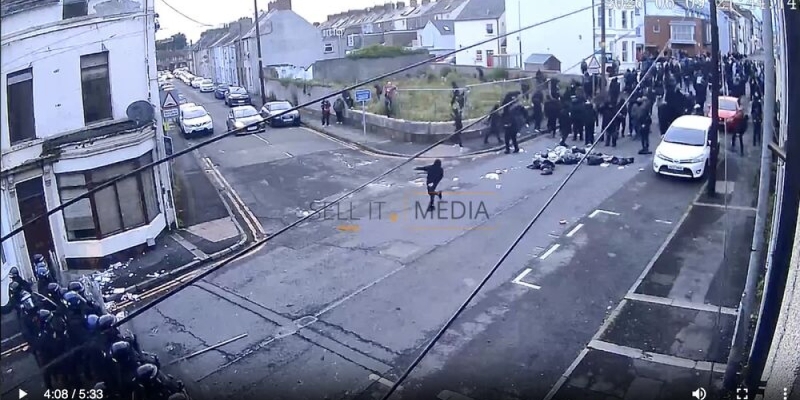
At one end of the road, police in riot gear lock together into a blockade. At the other, hundreds of figures clad in black move through the smoke - throwing bricks, lighting fires, shouting into the dusk. A lone protester breaks across no man's land and hurls a projectile at the police line. The crowd roars.
They have gathered after a man was attacked in the street with a knife. The suspect, it later emerges, is a Sudanese immigrant with refugee status. Simmering tension tips into open violence - the kind that politicians of every affiliation will line up to condemn by morning.
By tomorrow, it is the top story in the UK.
By evening, every newsroom is there. By then, it's already over.
By late afternoon, the TV crews and newspaper journalists are packed into the "safe zone" beyond the police cordon, cameras trained on whatever is left of the disorder. The footage they capture will lead the bulletins and fill the front pages.
But the most valuable footage of the night was shot before any of them arrived.
A single camera was already pointed at the road as the crowd gathered - capturing the moment the situation turned, the first projectile, the storm building before it broke. That is the footage every newsroom wants and almost none of them have: not the aftermath, but the event itself.
This is the eyewitness layer - and it's the gap in your coverage
The most important footage of a breaking story is rarely shot by a broadcaster. It's filmed by the person who happened to be there: a passer-by with a phone, a shop's CCTV, a Ring doorbell pointed at the street.
This is the eyewitness layer. It's where the real moment lives - and it's the missing link for TV newsrooms and digital publishers everywhere. You use it to fill the gaps your own crews can't reach in time, because no broadcaster can have a camera on every street when a story breaks without warning.
The problem isn't whether the footage exists. It's whether you can find it, verify it, and clear it - fast enough to matter.
Right now, sourcing it is a scramble
When a story like the Belfast riots breaks, the newsroom routine is the same everywhere:
- Trawl social media for clips, then chase the uploader for rights
- Post public callouts and hope someone responds
- Wait for the phone to ring
It's slow, it's competitive, and the clock is always against you. By the time you've confirmed a clip is real and secured permission to use it, a rival has often run it - or the news cycle has moved on.
Sell-It.Media closes the gap
Sell-It.Media is a marketplace for eyewitness video. Eyewitnesses upload what they've filmed; media outlets bid for it.
For a newsroom, that means:
- Instant access to footage from the scene, in one place, instead of a manual hunt across social platforms
- Verified video with clear provenance, so you can publish with confidence
- Clean exclusivity - you secure the rights directly, and the person who filmed it earns for offering it to you
It turns a frantic scramble into a transaction: find the clip, win the bid, run the story.
The footnote on Belfast
The image above comes from a video sent to Sell-It.Media by an eyewitness on the day of the riots. It captures the moment most of the late-arriving crews missed.
No newsroom picked it up.
For the biggest UK story of the day, the footage that showed the storm gathering was sitting there, verified and ready to license - and it went unused. Maybe someone missed a trick.
The next time a story breaks, the eyewitness footage will be there before your crew can be. The only question is whether you're looking in the right place.
Browse breaking eyewitness video - or set up newsroom access - at sell-it.media.